
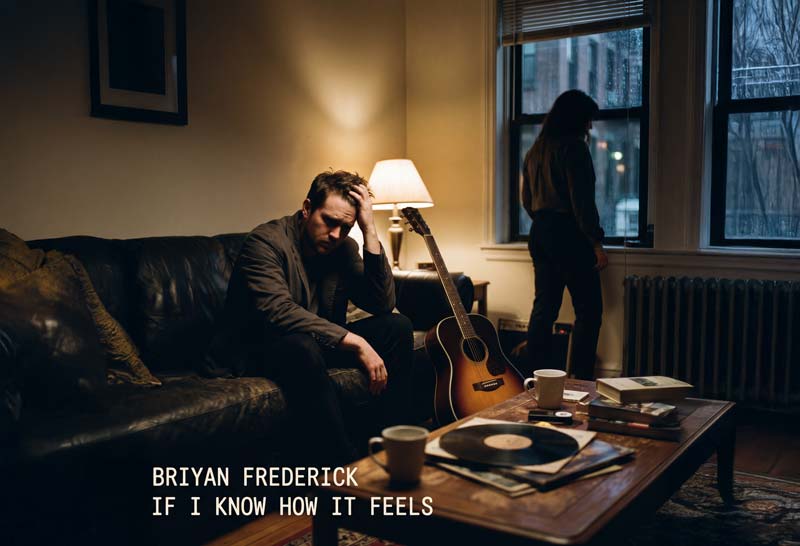
If I Know How It Feels
I can tell by your eyes
Something's calling
I can tell by your eyes
I can tell by your tears
In the darkness falling
Can't wash away the years[Chorus]
If I know how it feels
Why do I keep on trying?
If I know how it feels
Why do I keep on lying?
If I know how it feels
Why do I still want you?[Verse 2]
I can tell by your touch
That leaves me wanting
Wanting so much
I can tell by your kiss
Sweet but haunting
It's never enough[Chorus]
If I know how it feels
Why do I keep on trying?
If I know how it feels
Why do I keep on lying?
If I know how it feels
Why do I still want you?[Bridge]
If every day's a new day
Tell me why is every night the same?
Here you hide and there you run
'Til all of it has come undone[instrumental cathartic guitar solo]
I can tell by the way
You keep me waiting
You're never gonna change
I can tell by the way
You're hesitating
You'll never feel the same[Chorus]
If I know how it feels
Why do I keep on trying?
If I know how it feels
Why do I keep on lying?
If I know how it feels
Why do I still want you?
Oh, oh why do I still want you?
I originally wrote and recorded “If I Know How It Feels” at home about fifteen years ago. It came together in one afternoon, on a day off from work, without much of a plan beyond the fact that I was going to make music that day. I sat down at the piano and started playing, and the lyric and music arrived together, which is often the best way for a song to find itself. There are times when a song feels like something you are constructing, piece by piece, and there are times when it feels like you are following it. This was one of those days where I sat down and followed it.
The original recording was a full-band home recording: piano, guitar, bass, drums, and vocals, all played by me in real-time passes into a DAW. It wasn’t a sketch in the sense of a vocal over a chord progression. It was a record. A home record, yes, but a real one. I built the arrangement as I went, layering the parts until the song became the thing I was hearing. Piano held the center of it, but the other instruments gave it that movement and ache it needed. By the time it was done, it felt complete in a way that surprised me.
I hadn’t been recording much for a while before that. Maybe that’s part of why the song stands out to me now. When I finished it, I felt like I had somehow improved during the time I had not been actively working. That sounds strange, but I think it happens. Something catches up inside you. You live, you listen, you absorb, you change, and then one day you sit down and the hands know something they didn’t know the last time you asked them. The jump is not always the result of obvious practice. Sometimes the practice has been going on underneath everything else.
After I made the recording, I remember either being called into work or going into work for something. I played it for a few people there, which was not something I often did. I usually kept that kind of thing more private, especially right after making it. A new recording is still warm when you first carry it out into the world. It has not yet hardened into catalog or artifact or memory. It still has your fingerprints all over it. You are still close enough to the making of it that another person’s reaction can feel larger than it probably should.
There was one guy in particular, Bob, whose reaction I remember because I think I expected him to like it, or at least to show some kind of support. He did not really show a positive or negative reaction. He just didn’t give much back. That is not what the song is about, and I do not want to make too much of it, but the memory stays attached to the recording because that is how memories work. You make something alone, pour yourself into it for an afternoon, feel good about it, then carry it into ordinary life where other people are busy being themselves. They may hear what you played them, or they may not. They may be distracted. They may not know what to say. They may feel something and not show it. They may not like it. They may feel you are stepping into some space they occupy. You never really know.
I do not think about that moment as a slight. It does not sting in that way. I am still curious about it, though. I wonder what he actually thought. Maybe he thought the recording was rough. Maybe he thought the performance was not perfect. Maybe he simply had no reaction. Maybe there was some nuance I could not read at the time and still cannot read now. We spend so much of life trying to understand what other people think, but even when they tell us, we are still interpreting. We read between the lines, and then we put our own thing onto what we think we have read. That is part of being human, I guess. It is also part of being an artist. You eventually have to be satisfied with the work itself because no reaction from the outside world will ever fully resolve the question.
“If I Know How It Feels” is not about any particular person or relationship. I was not in a relationship at the time. It is a song about unrequited love, but not because I was reporting on a specific event from my life. I was putting myself into that feeling and exploring it. That distinction matters to me. There is a common idea that songwriters only write from their own lives, and in one sense that may be true because everything passes through the writer. But I think saying that too narrowly turns art into a kind of diary requirement. It suggests you must have literally been in the situation to write honestly about it. I do not believe that.
Art is expression. Sometimes it comes from direct experience. Sometimes it comes from imagination, empathy, memory, observation, or a feeling you recognize even if the circumstances are invented. Even when we write “from life,” we are often fictionalizing reality. We select, compress, exaggerate, reshape, and dramatize. We turn people into characters, moments into symbols, confusion into verses and choruses. The truth of a song is not always the factual source of the lyric. Sometimes the truth is whether the feeling rings.
The feeling in this song still rings for me. “If I know how it feels, why do I keep on trying?” is a strong and vital question. It does not feel diminished by time. I do not hear it now and think, well, that was a younger man’s melodrama. I hear it and recognize something essential. People do keep trying after they know better. People do keep wanting what does not come back to them in equal measure. People do understand a pattern and remain caught in it. That is not limited to romance. It can be love, ambition, family, work, art, approval, memory, or any number of things we return to even after experience has warned us.
The lyric starts with recognition. “I can tell by your eyes.” That is an intimate line, but it is also a writer’s doorway. The song begins by reading signs in another person. Eyes, tears, touch, kiss, waiting, hesitation. The narrator is trying to know the other person through fragments. He does not have certainty, only evidence. That feels true to unrequited love because so much of it happens in interpretation. You study tone, timing, pauses, glances, and absence. You turn small gestures over and over in your mind, hoping they will confess something.
The chorus then turns that outward observation back inward. The narrator knows enough to see the situation, but not enough to stop wanting. That is the conflict. The song is not asking why the other person behaves the way they do. It is asking why the narrator remains emotionally available to the hurt. “Why do I keep on trying?” becomes “Why do I keep on lying?” and then “Why do I still want you?” That movement from effort to self-deception to desire is the heart of the song. It admits that longing is not always noble. Sometimes it is stubborn. Sometimes it is humiliating. Sometimes it is the part of us that keeps showing up after the more rational part has already left the room.
I like that the second verse lets the sweetness remain. “I can tell by your kiss / Sweet but haunting / It’s never enough.” The song would be much flatter if the object of longing were simply cruel or empty. The ache comes because there is something there, or at least enough there to keep the narrator wanting. That is how these feelings often work. They are fed by almosts. Almost loved. Almost chosen. Almost understood. Almost enough. The haunting comes from the sweetness because sweetness without arrival can become its own kind of ghost.
The bridge opens the song into a larger pattern. “If every day’s a new day / Tell me why is every night the same?” That line still feels important to me because it pushes against one of those easy sayings we use to comfort ourselves. Every day may be a new day, but that does not mean we become new people just because the sun comes up. Nights repeat. Thoughts repeat. Emotional habits repeat. We can wake up determined and still end the day in the same old ache. The song knows that change is not automatic. It knows that repetition has weight.
Then the lyric says, “Here you hide and there you run / ’Til all of it has come undone.” I like that movement because it does not over-explain the other person. It lets them remain elusive. They hide, they run, and things come undone. That is enough. The song is not a courtroom. It is not building a case. It is living inside the emotional weather of wanting someone who does not meet you where you are.
The guitar solo after the bridge matters because the words have reached their limit. In the original recording, that instrumental release was part of what made the track feel solid to me. I was not just writing a lyric over chords. I was arranging a full emotional arc. The drums entering, the band building, the guitar opening up — all of that allowed the song to move beyond confession into release. That is one of the things I still value about making full-band recordings at home. You can take a private feeling and give it a room to move around in. You can make it physical.
Revisiting the song fifteen years later has been less about nostalgia than recognition. I have forty-plus years of making music behind me now, and I am still making new work. Songs do not sit still in a catalog. They change as you change. The original recording belongs to that afternoon, that room, that version of me who sat down at the piano and made something. But it also belongs to me now, as part of a longer body of work I am continually sorting through, restoring, reimagining, and extending.
The current version has been remixed through Suno AI, which adds another layer to the song’s life. I do not hear that as replacing the original impulse. The original home recording is the source, the seed, the afternoon where the song came into being. The new version lets me revisit it through the tools I am using now, in the context of the work I am doing now. That is one of the interesting things about having a long creative life. The past does not have to remain sealed. It can be brought forward, not as a museum piece, but as living material.
There is a thread running through all of this for me: the private act of making something, the uncertain act of sharing it, and the long act of living with it. When I made “If I Know How It Feels,” I felt good about it immediately. I knew I had made a good record. That does not mean perfect. It means alive. The arrangement worked. The playing was solid. The feeling was there. It gave me enough confidence to start making an album of new songs after that. In that sense, the song became a doorway. It reminded me that the work was still there in me.
That may be the larger meaning of the song in my catalog. It is about unrequited love on the surface, but it is also connected now to the experience of making music because you have to make it, regardless of how it is received. You can want the world to answer back. You can want a person to answer back. You can want a listener, a friend, a co-worker, another musician, or some imagined audience to confirm what you felt when you made the thing. But the answer may not come clearly. It may not come at all. You still have to know what the work is worth to you.
I think that is why “If I Know How It Feels” still feels strong to me. It understands wanting without resolution. It understands the strange persistence of desire. It understands that knowing better does not always free us. And from where I stand now, looking back at that afternoon fifteen years ago, I can also hear another question underneath it: if I know how it feels to make something and send it out into the uncertain air, why do I keep doing it?
The answer, of course, is in the work itself. I keep doing it because the making is the thing. Because sometimes on a day off, with nothing planned, I can sit down at a piano and a song will arrive. Because sometimes a recording made in an afternoon can still speak fifteen years later. Because art does not require permission from biography or validation from the room. It only has to find the feeling and carry it honestly for as long as it can.