Does Anybody Listen Anymore? Suno, Creative Aging, and the Return of Old Songs
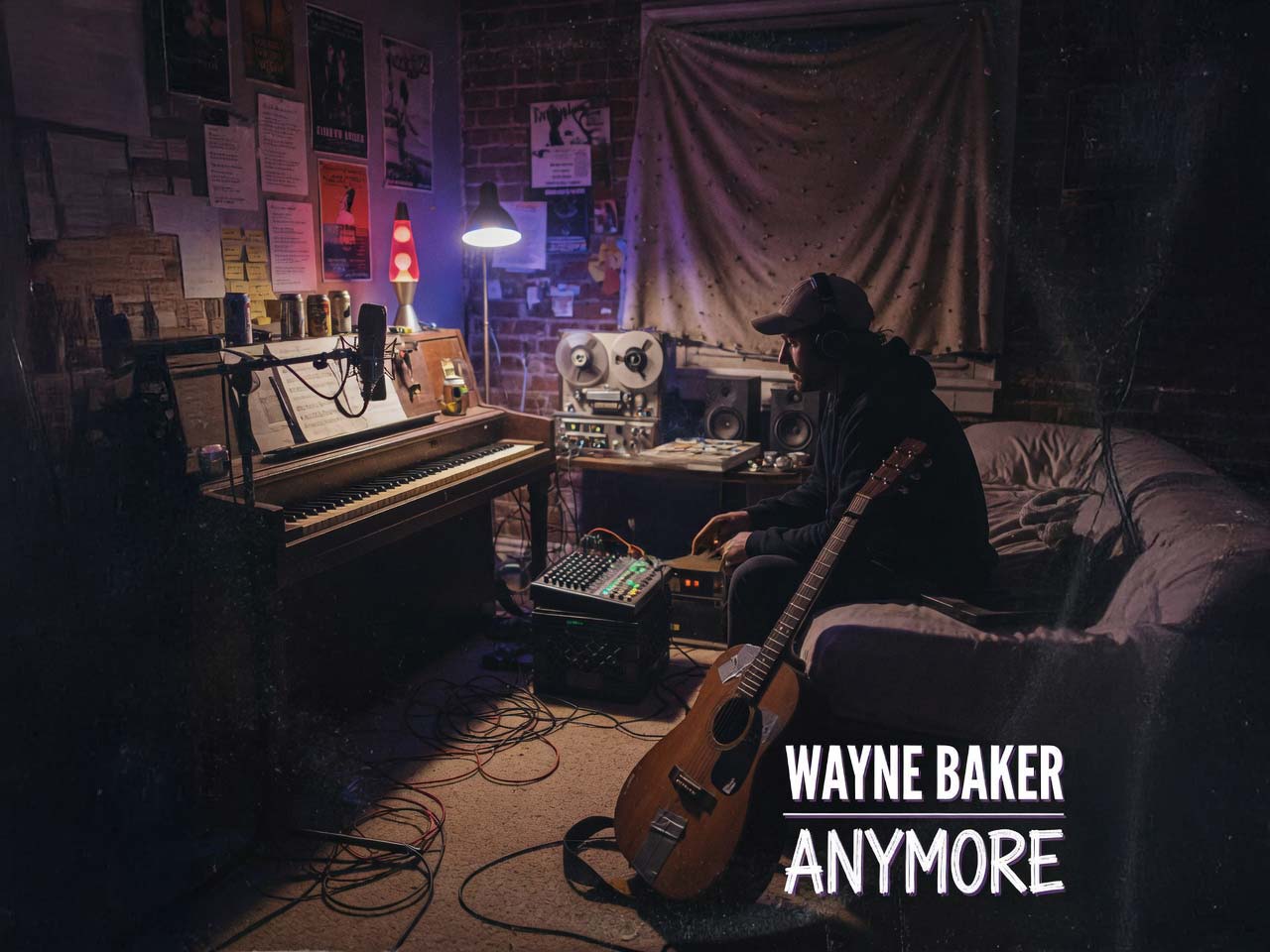
Earlier this evening my brother Wayne sent me an old demo, and that simple act carried a lot of years with it. It was not just a song file arriving in a message. It felt like something we used to do thirty-five years ago when we lived together and made songs on a four-track in the basement. Back then, music was something we passed back and forth in the room: a guitar part, a lyric, a half-sung idea, a mistake that suddenly sounded right, tape hiss, cheap microphones, basement air, and the feeling that a song could appear if we stayed with it long enough.
The lyric Wayne sent circles around a performer remembering the days when people followed him, when his face was on television screens and magazine pages, when his voice echoed in concert halls. The hook keeps returning to the ache of being heard once and then forgotten: “Remember how they loved you,” the song says. “They waited for your songs. But they’re not listening. They don’t listen anymore.” Later, the question becomes even more direct: “Does anybody listen? Do they listen anymore?”
That line hit me differently tonight because we are living in a moment when tools like Suno are making it possible for people to return to old demos, forgotten lyrics, notebooks, poems, diary entries, cassette tapes, and scraps of creative life they may have thought were long past saving. A song that once lived in a basement can come back into the present, not as nostalgia only and not as a museum piece, but as something active again. A song can ask, “Does anybody listen anymore?” and the answer can be: yes, I’m listening.
The New Four-Track
I keep thinking about Suno as a kind of new four-track, though that does not quite say it all. The old four-track was revolutionary because it let people make music without permission. You did not need a studio, a label, or someone official to tell you your song was worth recording. You could plug in, bounce tracks, fill up a cassette, and make something in a basement, bedroom, garage, or spare room.
A lot of us did exactly that. Some of those songs went nowhere, some were shared with friends, some were mailed around in the cassette underground, and some ended up in boxes. Some survived only as titles written on paper sleeves. Some became stories we told ourselves later: I used to make music. I used to write songs. I used to have ideas.
Then life happened. Jobs happened, kids happened, bills happened, and so did marriages, divorces, illness, grief, caregiving, exhaustion, disappointment, and the slow erosion of confidence. Some people stopped because they lacked time. Some stopped because they lost bandmates. Some stopped because recording became too complicated or too expensive. Some stopped because nobody seemed to be listening.
And then, suddenly, here is a tool that says: bring me what you have. Bring a lyric, a rough demo, a melody, a paragraph from a diary, a poem written in a hard season, a half-finished chorus from 1989, or a song your brother sent you on an ordinary evening. Bring it here, and let’s hear what it might become.
Not Museum Preservation
When I think about putting an old demo through Suno, I do not think of it as simply preserving the past. I do want to honor the spirit of the original song. I want to respect the lyric, the feeling, the ache, and the strange little choices that made it what it was. In Wayne’s song, I want to preserve that loneliness of the old performer, that question of whether the world has moved on, that late-night feeling of singing to a room that may no longer exist.
But preservation alone is not enough, because the exciting part is having a new conversation with the song. What did this song always want to be? What did we hear in our heads back then but could not quite reach with the gear, players, voices, or money we had? What happens when the old basement sketch suddenly has a larger band around it? What happens when the chorus opens up? What happens when the sadness becomes cinematic, rawer, stranger, or more intimate?
That is not a betrayal of the old song. It is a continuation. Creative aging is like that too. We do not return to the past as the same people. We bring the years with us: loss, humor, regret, tenderness, craft, patience, and perspective. We hear differently. We understand our own words differently. A line written decades ago may suddenly reveal something we could not have known when we first wrote it.
The old demo is not merely a relic; it is a seed. It carries the feeling of the original room, the people who made it, the limitations of the equipment, and the emotional weather of that time. When it comes back through a tool like Suno, it does not erase that history. It gives the seed another chance to grow.
Creativity While We Are Still Here
This is where I think Suno and tools like it may have a real impact on aging. There are millions of songs sitting in closets, boxes, drawers, hard drives, old notebooks, and memory. There are lyrics written by people who never had a band, poems written by people who never thought they could sing, home recordings made by teenagers who are now grandparents, diary entries that carry more emotional truth than half the songs on the radio, little fragments of melody hummed into phones, and cassettes labeled in fading ink.
For many people, those things have been quietly waiting. The old idea of music-making could be unforgiving. You needed access, equipment, collaborators, a voice, or the confidence to use one. You needed money, time, mobility, health, training, or a network of people who could help bring the thing to life.
A lot of people were left out. Older people were left out. Disabled people were left out. People with chronic illness were left out. People with social anxiety were left out. People with limited money were left out. People who could write but not perform were left out. People who had songs inside them but no practical way to realize them were left out. Now some of those people are finding a door.
That matters because creativity is not a luxury item. It is one of the ways people feel alive in the present. It is one of the ways we recognize ourselves. It is one of the ways we say, “I am still here.” When an older person hears an old lyric become a song, something powerful can happen. It is not only nostalgia. It is validation. It says: that thing you wrote mattered, that feeling you carried had shape, that impulse was not foolish, and that part of you did not disappear.
Maybe most importantly, it says you can still make something now. That may be the most moving part of it: the creative act does not have to belong only to someday, or to back then, or to the younger version of ourselves we sometimes imagine had the real chance. It can belong to now.
Hope for the Disenfranchised Creator
I have seen a lot of older folks returning to music for many reasons. Some are dusting off boxes of lyrics. Some are feeding old demos and home recordings into Suno. Some are taking diary entries and other private writing and hearing them come back as songs. Some are creating for the first time because this new tool finally meets them where they are.
That word “joy” keeps coming up for me, because there is joy in hearing the song, joy in the surprise of it, joy in laughing when the AI gets something oddly right, joy in trying another version, and joy in realizing that the old notebook still has power. There is joy in sending the result to a brother, a daughter, a friend, or a small circle of people who understand the story behind it. For people who have felt creatively disenfranchised, that joy is not trivial.
Someone with a disability may be able to hear music they imagined but could not physically perform. Someone who is isolated may find a creative companion at two in the morning. Someone who never had the confidence to sing may finally hear their words carried by a voice. Someone aging into a quieter season of life may discover that the quiet is full of material.
This is not about chasing fame. In fact, one of the most beautiful things about this moment is that so much of it seems to be happening away from the usual machinery of fame. People are making songs because the songs matter to them. They are sharing them because they want to be heard by someone, not necessarily everyone. That is a very human scale.
The Community Around the Song
When someone shares a song made from an old lyric or demo, they are often sharing more than music. They are sharing a piece of their life. They are saying, “This is something I wrote when I was twenty-three,” or “This came from a tape I made after my divorce,” or “This was a song my brother and I worked on in the basement,” or “This started as a diary entry,” or “This was from a band I had before the kids were born.”
The song becomes a doorway into memory, and memory becomes a doorway into connection. Other people do not just hear the track. They hear the story around the track. They witness the return. That is where this becomes bigger than personal revival. It becomes community.
Aging can make people feel invisible. Disability can make people feel sidelined. Isolation can make people feel unheard. Creative disappointment can make people pack away whole parts of themselves. But a shared song has a way of saying: here is my voice, here is my story, here is something I carried for years. When another person listens, the circle completes.
This feels connected to everything I have always loved about home recording and cassette culture. The point was never only technical perfection. The point was access, exchange, personality, and the thrill of hearing what someone made because they had to make it. A song could travel hand to hand. A tape could find its audience slowly. A small community could form around work that the mainstream never noticed.
Suno may be opening another version of that. The tools are different, but the impulse is familiar: make something, share it, listen back, and keep going.
Does Anybody Listen Anymore?
Wayne’s lyric asks a painful question: does anybody listen anymore? It is the question of the faded performer, the aging artist, the abandoned song, the old demo, and the notebook in the box. It is also the question many people quietly ask about themselves. Does anything I made still matter? Does the person I used to be still have a voice? Is there any point in bringing this forward now?
Tonight, when my brother sent me that old demo, I felt the answer in the act itself. He sent it, I listened, and the song was alive again between us, the way songs used to be alive between us in the basement thirty-five years ago. That may be the real promise of this moment: not that every old song will become great, not that every lyric will find a crowd, and not that Suno will magically turn every private archive into a masterpiece. The promise is simpler and maybe more important.
The unfinished things are not necessarily finished with us. The old songs can come back. The old words can find new sound. The people who thought their creative window had closed may discover another window opening. While we are still here, we can hear these things, shape them, share them, and let others know the stories behind them.
For creatively aging people, that is no small thing. For anyone who has felt left out of music-making, that is no small thing. A song can travel across thirty-five years and still ask to be heard, and sometimes, wonderfully, somebody is listening.